

UK Care Home Finance in 2026: What Lenders Are Looking For
Capital remains available, but leverage, pricing and structure increasingly depend on cash flow quality, operator capability and certainty of execution.


Financing remains available for UK care home operators in 2026, but lenders are taking a closer look at how operators turn occupancy into sustainable cash flow. A strong property asset alone is no longer enough. Funders want evidence that the business can absorb wages, agency costs, capital expenditure and interest while maintaining quality of care.
The lender market is also more diverse. Mainstream banks, specialist and alternative lenders, and growth-focused debt funds are all active, giving established operators and credible new entrants a wider range of funding structures to consider. Some higher-leverage growth funds can provide capital with characteristics closer to private equity-style risk, but without requiring the borrower to give up equity.
At the same time, fewer assets are coming to market. Christie & Co reported that new care instructions in H1 2026 were broadly level with, or slightly lower than, H1 2025. Coupled with improved trading performance across the sector, this has helped sustain competition for acquisition opportunities.
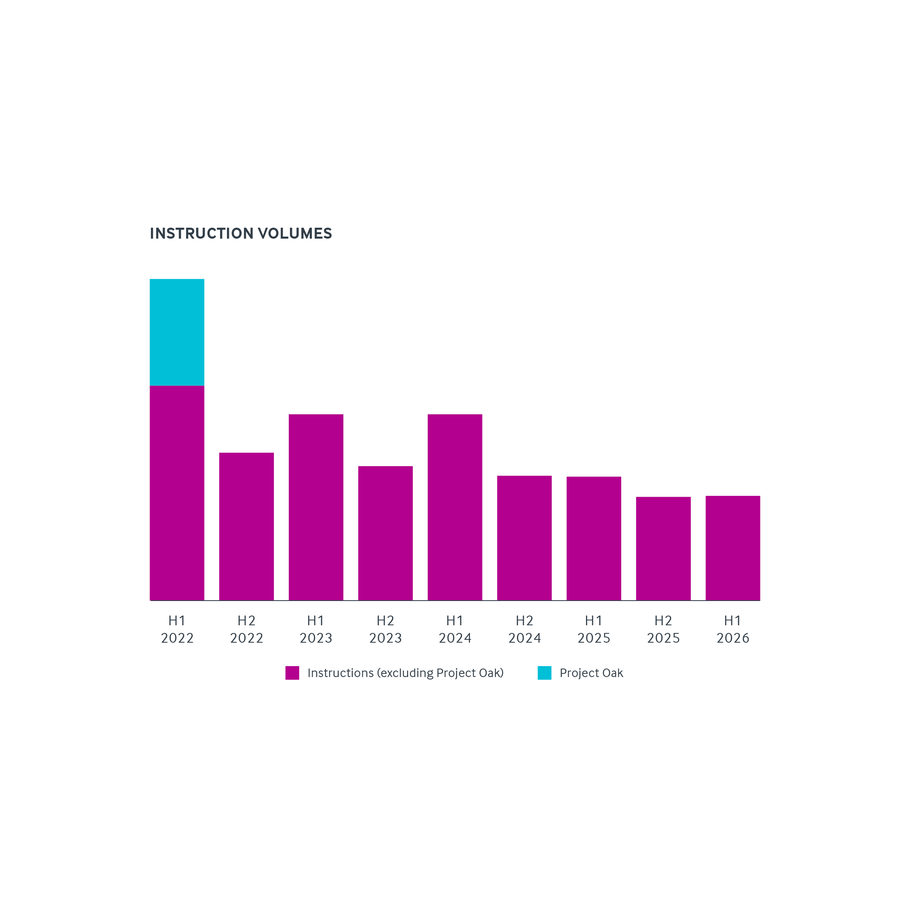
Christie & Co care instruction volumes, H1 2022 to H1 2026. Source: Christie & Co 2026 Care Market Review.
Why do lenders still want exposure to the UK care sector?
The fundamentals of the sector remain attractive. The sector continues to offer a combination of needs-led demand, improving occupancy, rising fee income, tangible asset backing and an established pool of operators and investors. Those fundamentals can support competitive debt terms where the underlying business is well run.
The difference in 2026 is the basis on which lenders are prepared to advance that capital. Operational quality and cash flow performance now carry more weight in underwriting, particularly where wage inflation, agency usage or capital expenditure could reduce debt service capacity.
What are care home lenders assessing in 2026?
The strongest funding propositions tend to demonstrate four things: sustainable occupancy and fee income, control of operating costs, sound regulatory performance, and a management team capable of delivering the plan. Together, these factors help lenders assess both the risk profile of a business and its ability to support future growth.
1. Consistent occupancy and a sustainable fee mix
Lenders want to understand whether occupancy is stable, how admissions are generated and whether demand is sustainable in the local market. Christie & Co's 2026 operator sentiment data found that 69% of respondents reported average occupancy of 90% or above, indicating that occupancy has broadly normalised following the pandemic.
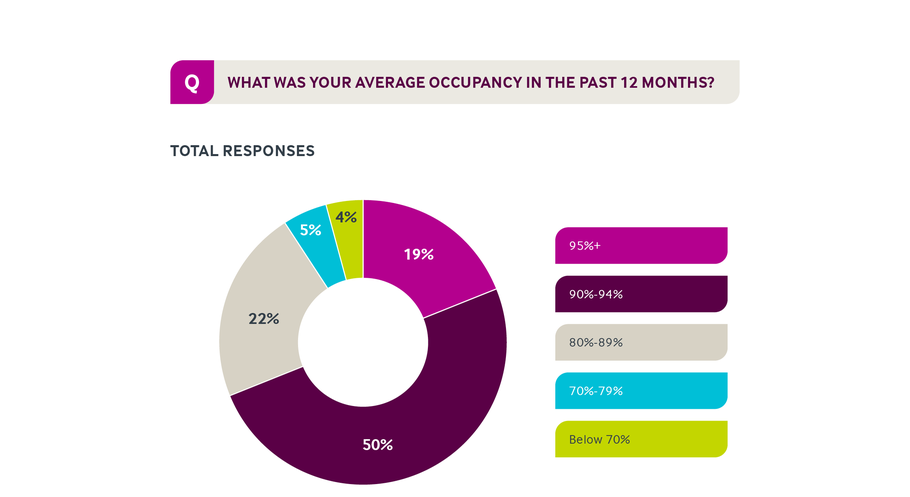
Average occupancy reported by care operators in Christie & Co's 2026 sentiment survey. Source: Christie & Co 2026 Care Market Review.
Fee mix matters just as much as occupancy. Christie & Co data indicates average fee increases across Great Britain of 4.3% to 5.1%. Lenders will look at whether those fee levels are sustainable and whether annual uplifts can absorb cost inflation.
Local authority-funded residents can support dependable referrals and occupancy, but lower fee levels and constrained uplifts may leave less headroom when wages rise. Private-pay income can offer greater pricing flexibility and stronger margins, but it can bring different affordability and competitive pressures. The strongest credit case is therefore not necessarily the home with the highest private-pay percentage; it is the operator that can explain why its mix works locally and show how margins behave under downside scenarios.
2. Staffing costs and operational execution
Staffing remains the highest operating cost for most care businesses. Increases in the National Living Wage and associated employment costs continue to put pressure on margins.so lenders are paying close attention to whether financial forecasts make realistic assumptions about payroll, recruitment and retention.
Agency dependency is a particular focus because it can increase costs and introduce operational volatility. Christie & Co's operator sentiment data found that 47% of respondents had reduced their reliance on agency staff. A funding proposal is stronger when it can evidence a credible recruitment and retention plan, manageable agency usage and sufficient management depth.
3. Regulatory performance and governance
Regulatory performance is closely linked to lender confidence because it can affect occupancy, fee income and the stability of the operating model. CQC ratings are therefore considered alongside financial performance as an indicator of how robustly a home is being managed.
Where a service has areas requiring improvement, lenders will expect a clear explanation of the causes, the actions already taken and how the improvement plan is being funded and monitored. Independent operational or regulatory support can strengthen the proposition where appropriate.
4. Management capability and reporting quality
For lenders, operator quality becomes especially important when a borrower is a first-time entrant, is acquiring a turnaround opportunity or is planning rapid growth. The key questions are straightforward: does the management team have relevant sector experience, a credible track record and the right financial and operational expertise around it?
A proposal should set out the background and responsibilities of key team members, explain the organisational structure and identify how any capability gaps are being addressed. Management information also needs to be strong enough to support regular lender reporting and covenant testing after completion.
Growth appetite remains significant. In Christie & Co's 2026 survey, 52% of respondents planned to buy care assets over the following 12 months, and a further 26% planned both to buy and sell. That level of acquisition intent makes a clear, credible funding proposition even more important.
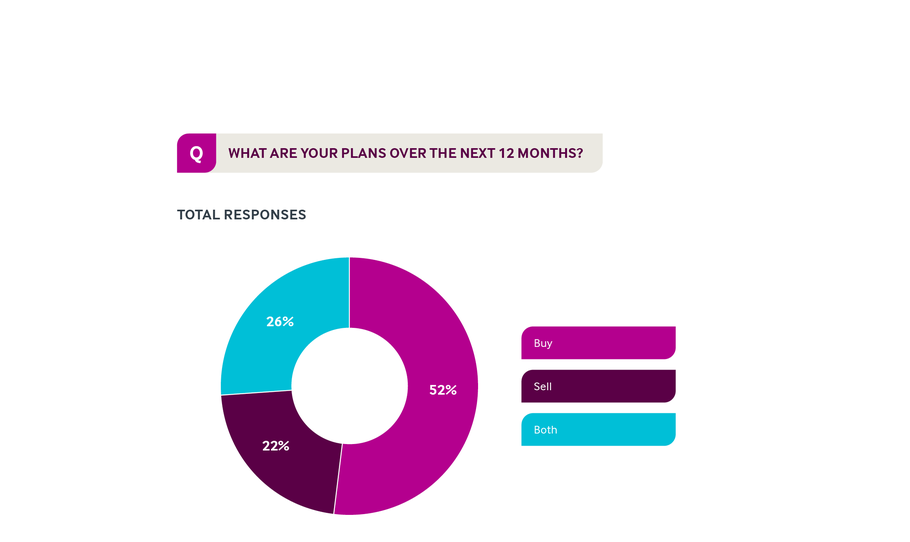
Care operators' plans for the next 12 months: 52% buy, 22% sell and 26% both. Source: Christie & Co 2026 Care Market Review.
What does this mean for care home borrowers?
These factors now influence both debt quantum and structure. For established assets, mainstream senior leverage commonly sits at around 60% to 75% loan-to-value. Higher leverage can be available to experienced portfolio operators, particularly where there is additional security or cross-collateralisation, but it is supported by stronger debt service coverage, reliable reporting and greater covenant headroom.
At the other end of the market, weaker trading, first-time ownership or material turnaround risk can result in lower initial leverage, tighter conditions or staged drawdowns. The exact structure will depend on the asset, operator, lender appetite and transaction circumstances, so headline loan-to-value should not be considered in isolation.
Fewer care businesses coming to market can also make lenders more selective. A good asset may attract interest from several funders, but the borrower still needs to present a compelling credit case if they want favourable pricing, flexibility and certainty of execution.
How should a borrower prepare for a care finance application?
Preparation is now a central part of a successful debt process. Christie Finance works with clients and their professional advisers to bring the commercial, operational and financial evidence together before approaching funders.
At a minimum, the funding pack should include:
- a robust financial forecast covering at least three years;
- monthly cash flow and profit and loss forecasts;
- site-level forecasts for each home within a group, plus a consolidated group summary;
- clear assumptions for occupancy, fee uplifts, wages, agency usage, capital expenditure and interest;
- a business plan explaining the operating strategy and the key risks;
- the backgrounds and responsibilities of key management personnel; and
- downside scenarios that show how the business performs if trading is weaker than expected.
Done properly, the forecast is not simply an application document. It becomes the basis for monitoring performance against the plan and, where relevant, testing financial covenants throughout the life of the loan.
What is happening in the care lending market?
There is still plenty of capital available for care sector operators in 2026. High Street banks, specialist healthcare lenders, debt funds and alternative funders all remain active, creating a competitive funding environment for strong businesses and acquisition opportunities.
Traditional lenders and debt funds are now also competing with non-debt capital. REITs and international investors remain active in the sector and may offer structures that sit alongside, or in some cases provide an alternative to conventional borrowing. This makes it important to compare the full commercial package - including covenants, flexibility, security requirements and execution risk - rather than focusing on headline pricing alone.
With all these opportunities available to prospective borrowers and operators, there also lies a high level of scrutiny. Christie Finance supports the preparation of a compelling funding application, but most importantly, provides a market-wide assessment of the terms available. This enables borrowers to understand different structures and terms being offered, giving confidence to make well-informed decisions on debt that will deliver growth or take advantage of opportunities
In 2026, lenders are underwriting delivery
The UK care sector remains an attractive market for lenders, supported by strong underlying demand and long-term demographic trends. However, access to capital is increasingly influenced by the quality of the operation behind the asset.
For operators, the implication is clear: securing finance is no longer simply about acquiring the right asset. It is about demonstrating that the business can operate profitably, maintain standards and service debt through a range of trading conditions.
If you are planning a care acquisition, refinance or growth project, Christie Finance can help you prepare the funding proposition, identify suitable lenders and structure a process around your objectives.
Speak to a Christie Finance care funding specialist
To read Christie & Co's full Care Market Review, click here: https://www.christie.com/sectors/care/market-review/